






Most enterprises now treat latency and accuracy as first‑class SLOs for their AI systems.
Cost doesn’t get the same discipline.
Teams rarely overspend because model prices are hard to find. They overspend because no one owns the decision to keep an expensive model in place after launch.
LLM spend sits in finance as a monthly total, disconnected from the model choices that created it.
AI API aggregation is how mature teams turn model cost into something they can steer, not just react to. Routing all model calls through a single, OpenAI‑compatible gateway gives them one place to see what’s running and attach spend to owners.
AI API aggregation creates one control point for every model call
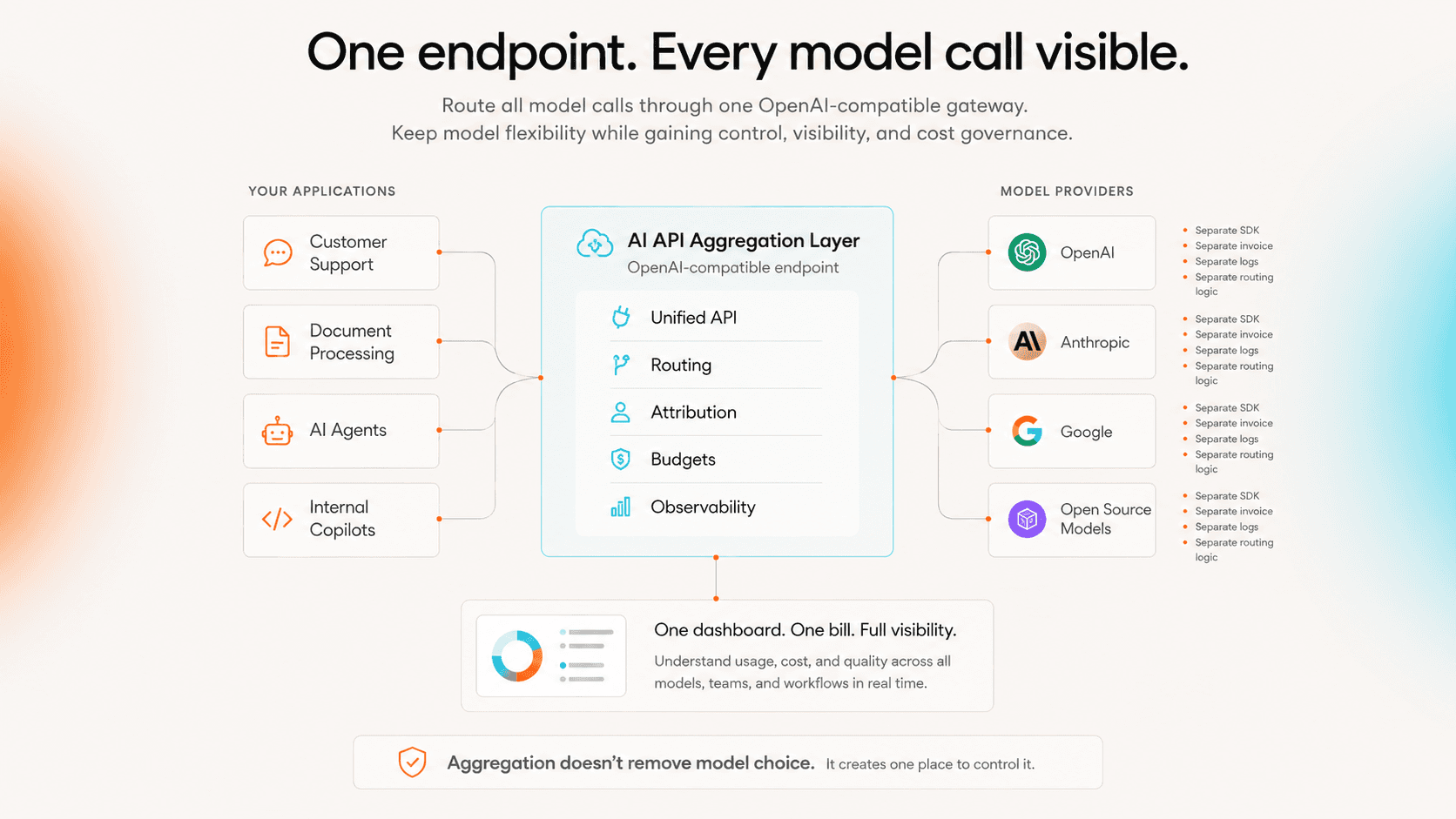
AI API aggregation means your applications call a single layer, not a dozen different provider SDKs.
The models can still vary by task, but access is handled in one place.
When each service talks to providers directly, routing rules and spend are buried in different codebases.
When everything passes through one layer, you finally have a single spot to see which models are being used at what cost.
In most stacks that layer is an OpenAI‑compatible endpoint sitting between your apps and the providers. Teams keep their flexibility at the model level.
The aggregation layer becomes the control plane where you decide how traffic should flow and how you want to measure it.
Aggregation creates the point from which the bill can finally be changed.
Multi-LLM costs become ungovernable when spend is distributed
The problem in most stacks is that spend accumulates in places nobody is watching, across systems nobody has stitched together.
Premium models become the default
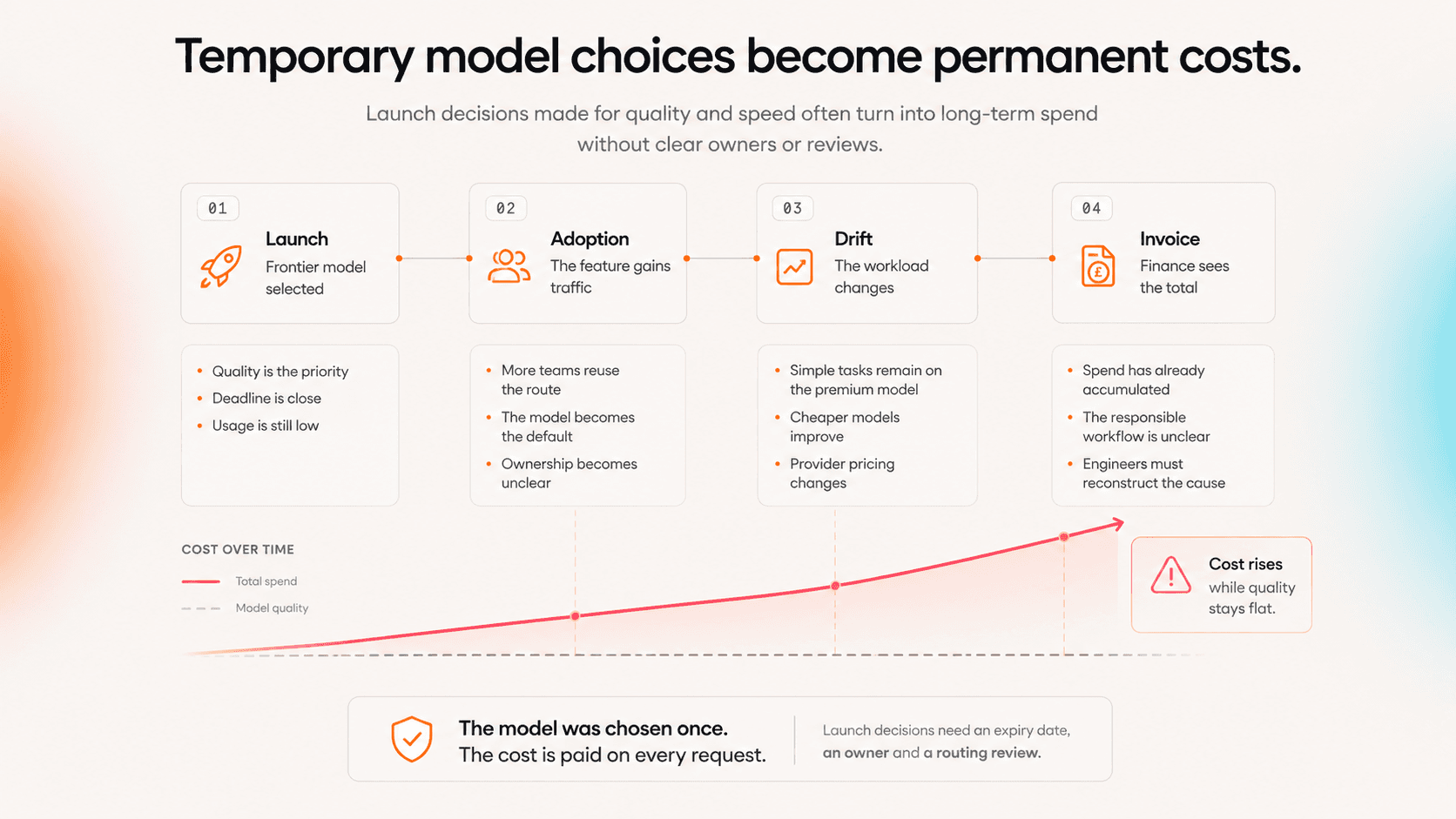
One pattern is obvious once you look for it: expensive models become the norm without your team even realizing it.
A team ships a feature on a frontier model because they care about quality at launch.
Months later, the same model is still handling simple classification and formatting work that cheaper options could do just as well.
Launch decisions have a habit of becoming permanent architecture. The model chosen under deadline pressure often survives long after the deadline.
Spend fragments across providers and teams
Another pattern sits in the way bills arrive.
Each provider invoices separately. Each team thinks about its own usage. Finance receives a stack of numbers that don’t line up cleanly with features or owners. When a spike shows up, it lands weeks after the traffic that caused it.
Someone has to reverse-engineer the story from logs and code rather than seeing it in real time.
The biggest waste is a cheap-looking call repeated at a scale no one is monitoring.
Provider pricing changes faster than routing decisions
Pricing adds a third layer of drift.
The cost of querying a model with GPT-3.5-level benchmark performance fell from $20 to $0.07 per million tokens between November 2022 and October 2024. A reduction of more than 280 times in roughly 18 months.
Builders tend to move with capability, not cost. They adopt the latest model that solves their problem, then leave it in place. The economic profile of the stack changes faster than the routing logic, so even flat usage can translate into rising spend.
Four controls turn API aggregation into cost governance
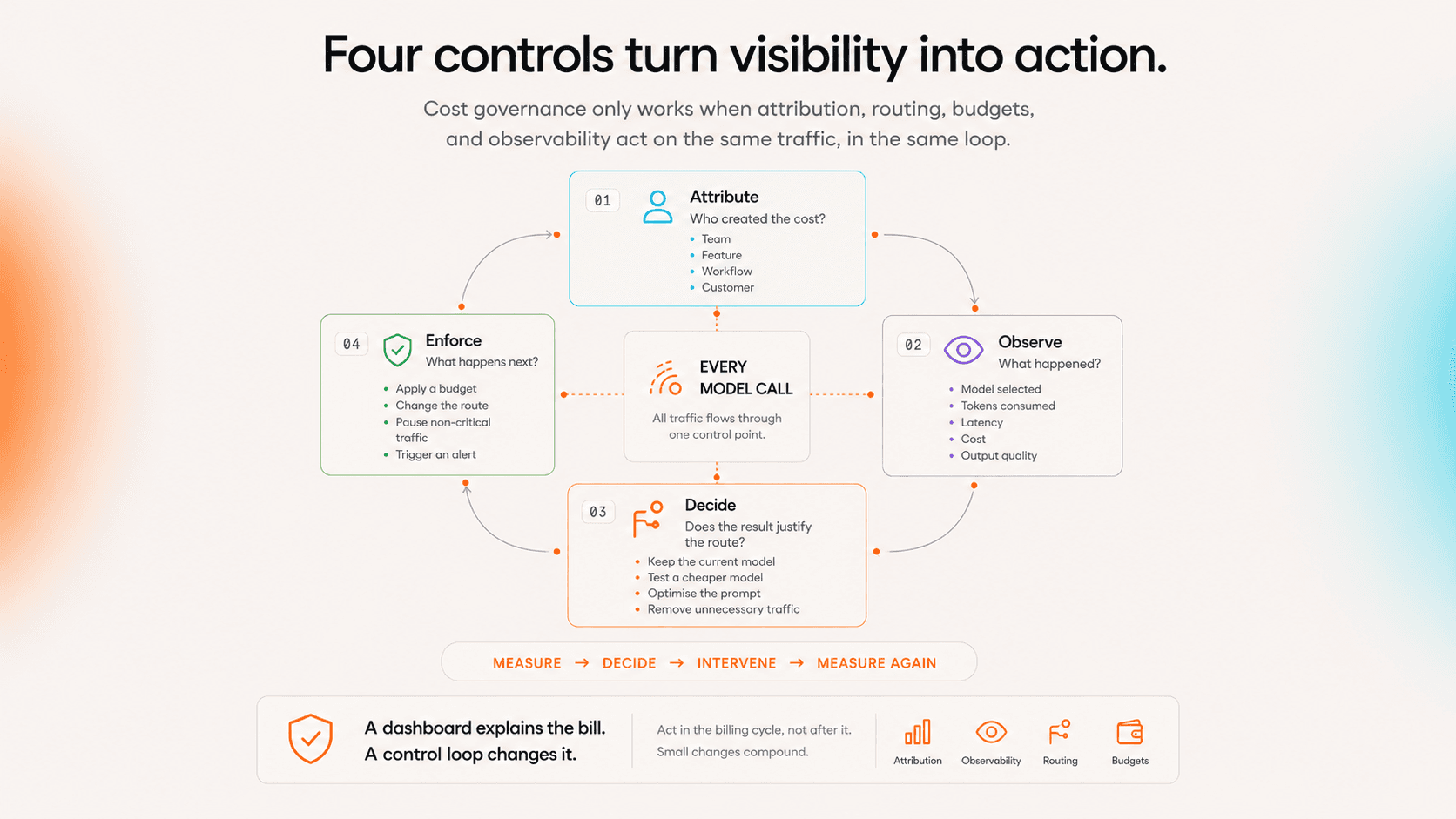
AI API aggregation only pays off when it does more than simplify access. To turn it into real cost governance, you need a small set of controls working in the same place, on the same traffic.
If any one of them lives outside the aggregation layer, it tends to leak.
Attribution shows who created the cost
A provider invoice tells you what the enterprise spent. It rarely tells you which product decision caused it.
Every model call should carry an owner, whether that’s a team or workflow. Once that identity travels with the request, a sudden increase stops looking like a finance mystery and starts looking like an engineering problem with a clear source.
Without attribution, teams debate the total.
With it, they can ask whether the spend belongs to a growing product, an inefficient prompt, or traffic that should never have reached a premium model.
Routing only saves money when quality holds
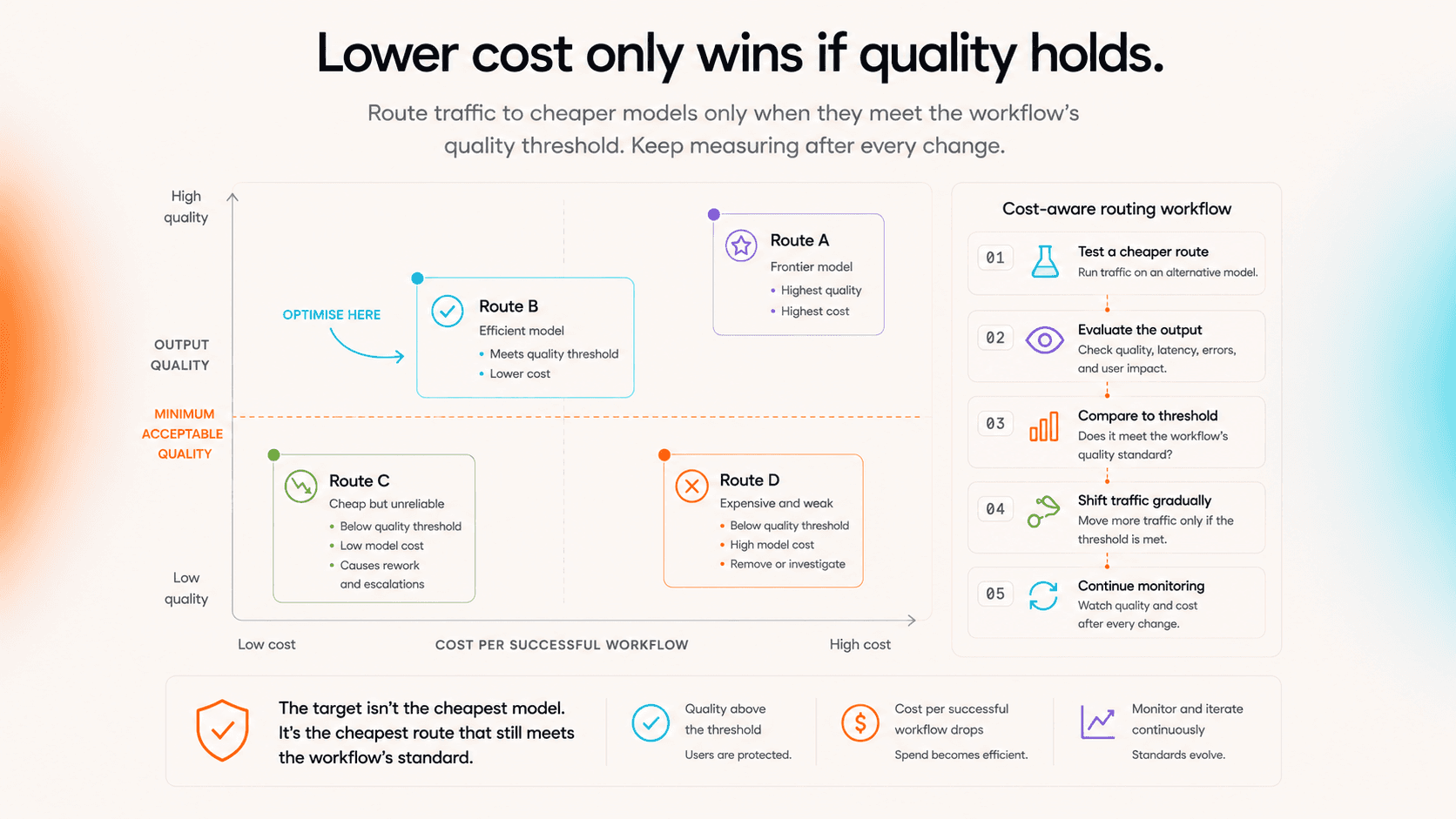
The cheapest route isn’t automatically the most efficient one.
A smaller model may cut the cost of a support workflow and still produce more escalations. Another may return valid JSON often enough to pass a basic test then fail on the requests that matter most.
In both cases, the model bill falls as the wider operating cost rises.
Routing decisions need a quality threshold tied to the workflow. Move traffic only when the cheaper route meets it, then keep measuring after release.
Otherwise, cost-aware routing becomes a pricing experiment conducted on users.
Budgets must act before the invoice arrives
A dashboard that reports an overrun after month-end is accounting, not control.
Budgets become useful when they can change what happens during the billing cycle. We find that a budget without an action is only an alert. Every threshold should trigger a predefined response before the next request is served.
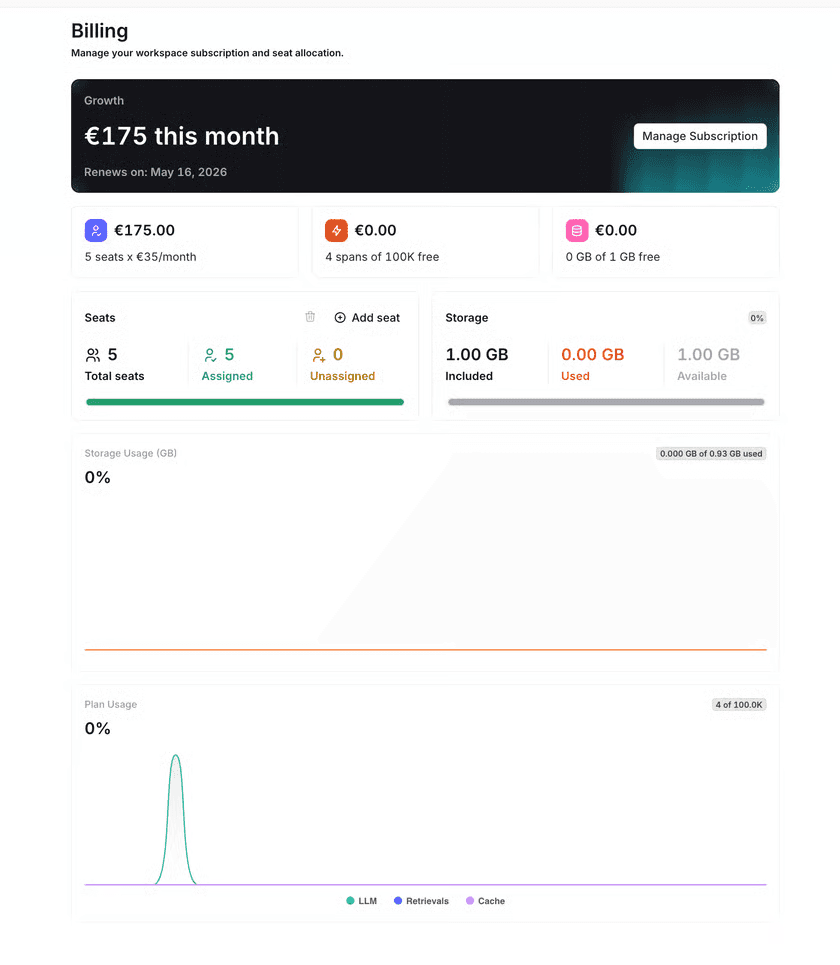
A team approaching its limit might move suitable traffic to a cheaper model or pause a non-critical workload before the excess becomes permanent spend.
That turns budget management into an operating decision. Finance no longer has to reconstruct the cause weeks later, and engineering gets time to correct the behavior while it is still happening.
Observability reveals which workflows deserve optimization
Not every expensive workflow is wasteful, and not every cheap one is efficient.
A high-value research task may justify a frontier model. A formatting job running thousands of times a day probably doesn’t.
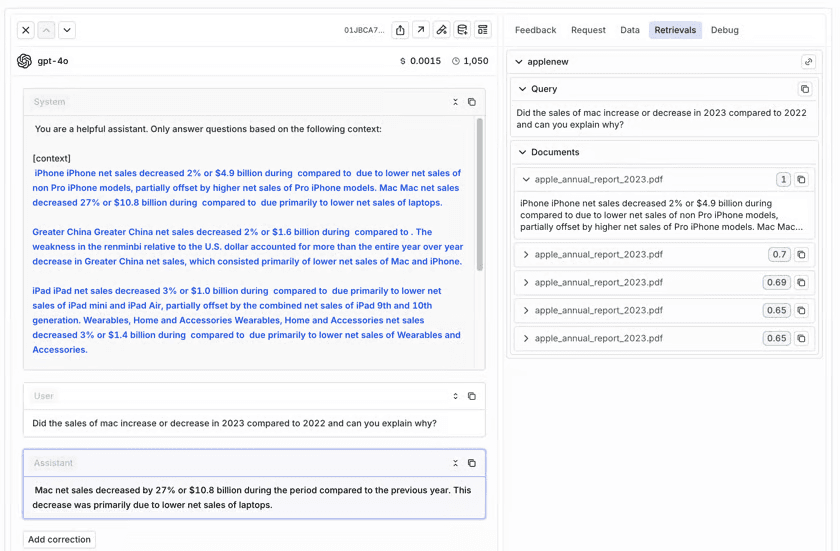
You need traces that connect each request to the route taken and the cost created before you can tell the difference.
Cost-aware routing needs quality guardrails
You can’t judge routing decisions by “did the request succeed?” alone.
Two models can both return plausible answers while one erodes accuracy.
If you move work to cheaper models without measuring output, you turn cost optimization into blind guesswork.
The right pattern is simple: treat routing and evaluation as the same loop.
Measure quality per route. Only let cheaper models take traffic when they meet the thresholds that matter for that workflow.
Cost dashboards without evals tell you how much you spent, not whether it was worth it.
Build in-house only when the aggregation scope is narrow
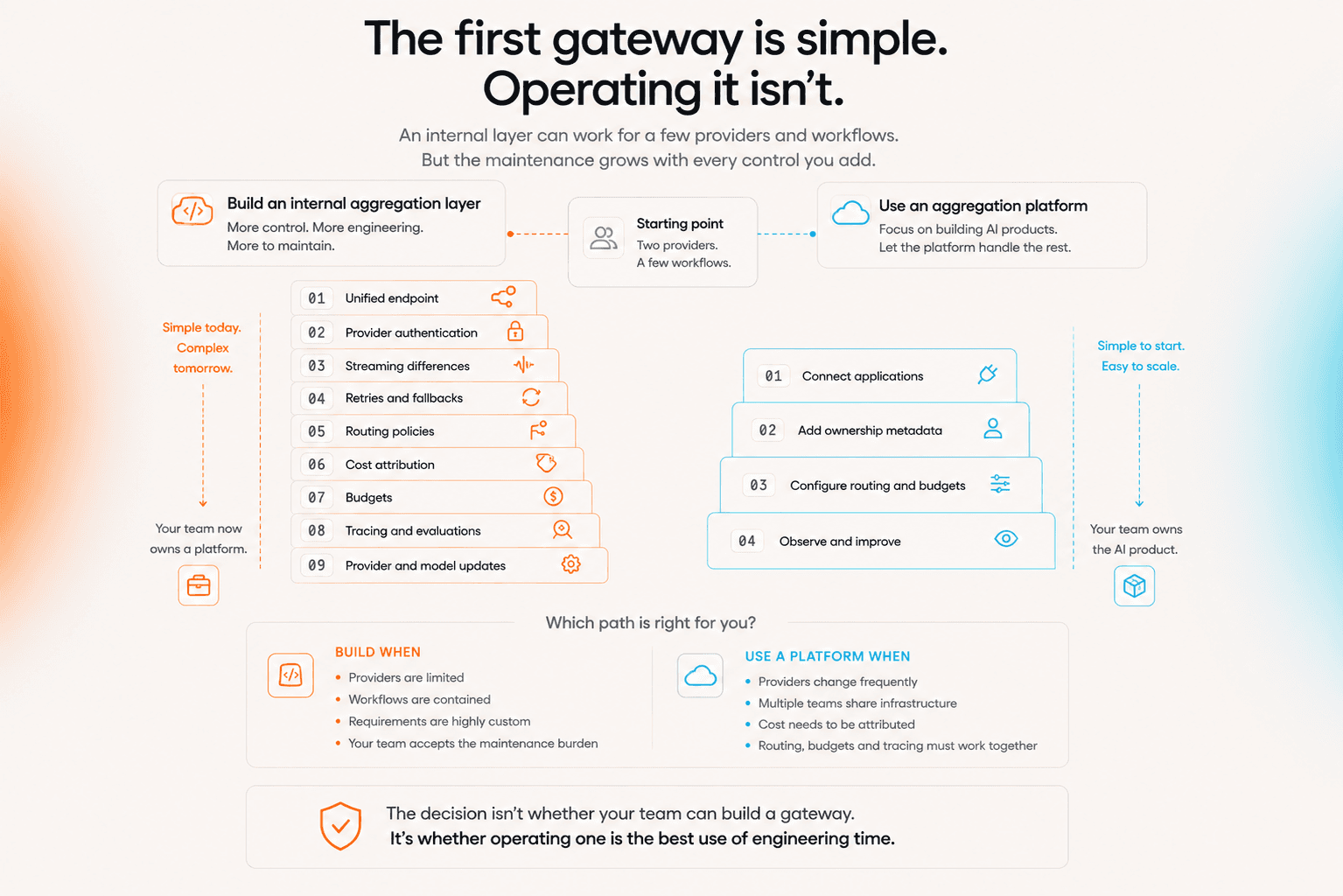
Building your own aggregation layer is reasonable when the problem is still narrow. If you only need to support a couple of providers and a small number of production workflows, a lightweight internal layer can be enough.
The difficulty starts once the stack becomes real. Provider APIs change. New models appear. Auth handling stops being edge cases and starts becoming core infrastructure.
That trade-off is easy to underestimate because the first version usually works. The second and third versions are where the real cost shows up. Each new provider adds another integration. Each new workflow adds more routing logic.
For small deployments, that may still be worth it. For enterprises running multi-model workloads in production, the build case usually weakens fast. The aggregation layer becomes its own product, competing with the actual product work it was supposed to support.
Situation | Build in-house | Use an aggregation platform |
A few providers, limited workflows | Reasonable | Also viable, but not always necessary |
Frequent provider changes | Maintenance grows quickly | Easier to absorb |
Custom routing needs | Possible, but fully owned by your team | Usually configurable without rebuilding core infrastructure |
Cost attribution and budgets | Must be built separately | Typically part of the control layer |
Observability and tracing | Extra engineering work | Usually built in |
Best fit | Small, contained deployments | Multi-model production environments |
Orq.ai combines access, routing, budgets, and observability in one layer
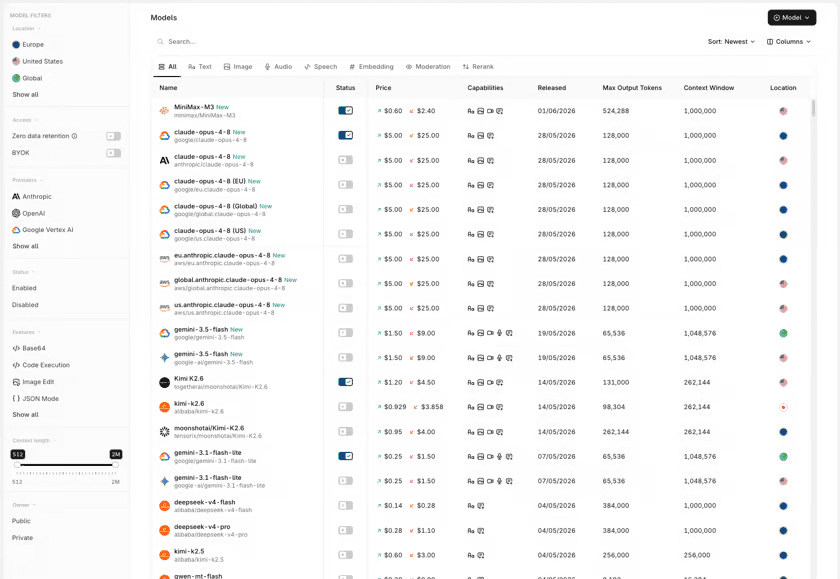
Orq.ai gives enterprises one control layer for model traffic instead of forcing them to stitch together separate systems after the fact.
Its OpenAI-compatible API lets teams move existing applications over with a base URL change and preserve familiar request formats.
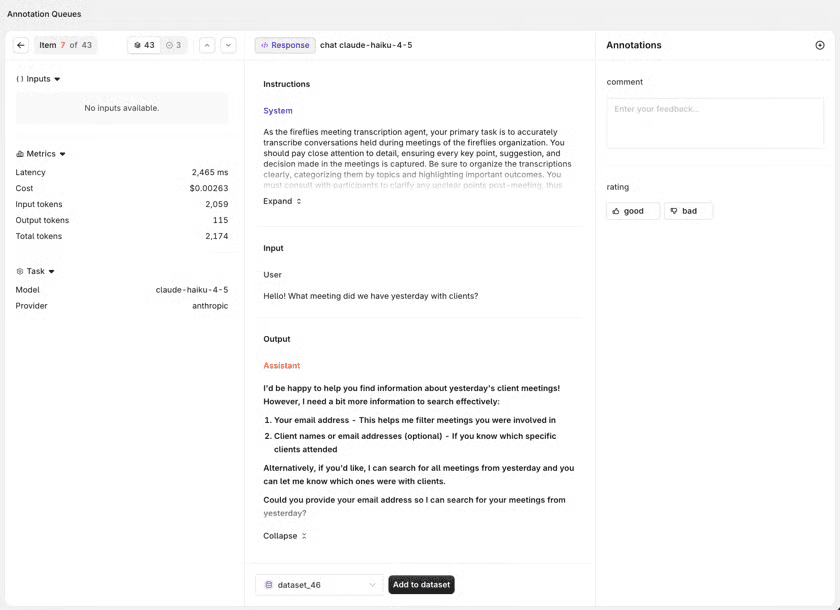
Once traffic passes through Orq.ai, you’ll see which route was taken and how the application behaved as a result.
That makes cost visible where routing decisions happen, so you can change model usage before inefficiency reaches the invoice.
One control point turns model spend into an operating decision
LLM spend is difficult to control when it appears only as a total at the end of the month.
Aggregation changes that by attaching each call to the workflow that created it. See where spend is rising, decide whether the result justifies the cost, and intervene before inefficient usage becomes normal.
That’s the real shift. Model cost stops being something finance reports and becomes something engineering can actively manage.
See how Orq.ai reveals which workflows are driving your LLM bill.