

Generative AI

Why Agent Engineering Needs a Full-Stack Platform, Not Another Point Solution

As AI agents move into production, fragmented tooling breaks down. Learn why enterprises need full-stack agent engineering platforms instead of point solutions.

January 14, 2026

Image of Reginald Martyr

Sohrab Hosseini

Co-founder (Orq.ai)

Key Takeaways

As AI agents move into production, fragmented point solutions struggle to support the complexity and coordination required at scale.

Evaluation alone isn’t sufficient anymore. Enterprises need integrated platforms that connect experimentation, deployment, and observability across the agent lifecycle.

Full-stack agent engineering reflects a broader industry shift toward consolidation, driven by the rising operational cost of managing disconnected systems.

Bring LLM-powered apps from prototype to production

Discover a collaborative platform where teams work side-by-side to deliver LLM apps safely.

Bring LLM-powered apps from prototype to production

Discover a collaborative platform where teams work side-by-side to deliver LLM apps safely.

Bring LLM-powered apps from prototype to production

Discover a collaborative platform where teams work side-by-side to deliver LLM apps safely.

Bring LLM-powered apps from prototype to production

Discover a collaborative platform where teams work side-by-side to deliver LLM apps safely.

The agent stack is breaking at the seams

Agent engineering is moving quicker than you’d expect. What started out as simple prompt orchestration has turned into a complex, multi-step system that can:

  • Call tools

  • Interact with users

  • Operate continuously in production

A lot of enterprises are trying to support these systems with various point solutions: one tool for orchestration, another for evaluation, another for observability, and yet another for deployment.

Today’s AI stacks often look like a mix of best-of-breed tools: orchestration frameworks, evaluation platforms, observability stacks, and generic deployment backends. Each tool solves a discrete problem, but stitching them together requires custom integration. It also creates blind spots in cost and operational visibility.

This disconnect leaves enterprises with various challenges at a time where reliability and control matter the most. 66% of AI teams report that they don’t have the tools needed to deliver models that meet business goals, while 71% of AI practitioners say they lack confidence in their AI solutions once deployed. Nearly one in three teams struggle to operationalize generative AI at all, despite strong model performance in isolation. 

As agent-based systems move from experimentation into core business workflows, the cost of managing disconnected systems is compounding rapidly across engineering and operation teams. Beyond cost, teams quickly accumulate technical debt when integrating these tools together. Orchestration frameworks, evaluation tools, observability layers, and model gateways often use incompatible abstractions and data models.

Leaders aren’t left with the issue of agents being able to deliver sufficient value. It’s whether their enterprise has the infrastructure to build, evaluate, deploy, and operate agents at scale. 

How agent engineering has evolved and why the old stack no longer works

Early agent systems were relatively simple.

A prompt, a model call, and maybe a model invocation or two that were stitched together in notebooks or lightweight frameworks. Point solutions made sense at that stage. Teams optimized for speed and proof-of-concept delivery.

Modern agent systems aren’t isolated experiments anymore, as they:

  • Coordinate multiple steps

  • Manage state

  • Call external services

  • Reason over documents or media

As these systems mature, they introduce requirements that the original stack was never designed to handle, like versioning across experiments, consistent evaluation, and controlled deployment. There’s a shift from raw compute expansion toward orchestration, lifecycle efficiency, and system-level coordination as AI systems mature.

The challenge isn’t just about building agents. It’s about operating them reliably at scale. That shift fundamentally changes what the underlying platform needs to provide. 

What breaks first when teams rely on fragmented stacks

Point solutions often feel productive at first, as each tool solves a clear problem. In isolation, they work well. 

However, the cracks start to appear when systems move beyond experimentation. 

The first thing to break is consistency. Prompts and agent logic evolve quickly, but evaluations and guardrails often lag behind. Teams lose clarity on which version of an agent is running. How it was tested, and what assumptions were made along the way. 

Next, ownership becomes unclear. Orchestration might live with one team, evaluations with another, and deployment with platform engineering. When something goes wrong, no single system shows how the agent behaved end-to-end. Debugging turns into coordination rather than engineering.

This fragmentation doesn’t just slow down engineering teams. It also compounds at the organizational level. While more executives are seeing AI as a growth driver, operational silos remain one of the biggest barriers to realizing value. In fact 84% of surveyed CMOs mentioned that fragmented operations are making it difficult to get the most out of their AI systems.

As agents enter production, these issues surface most clearly in observability. Teams can see failures, but commonly struggle to trace them back to specific prompts, datasets, or decisions across the agent lifecycle. 

Lastly, deployment risk increases. Without a unified view of experimentation, evaluation, and runtime behavior, even small changes feel high risk. Teams either slow delivery or ship without confidence.

Why evaluation alone isn’t enough in production

As agent systems mature, many teams invest heavily in evaluation frameworks to compare prompts, score outputs, or detect regressions. Although, it’s worth noting that evaluation on its own doesn’t solve the broader operational challenges of running agents in real business workflows.

The core limitation is context. Evaluations typically focus on model outputs in controlled settings. Static or isolated evaluations often fail to capture emergent behavior in multi-step agent systems operating in real environments. 

In production, agents operate across multiple steps and data sources. They adapt to changing inputs and trigger downstream actions. Without visibility into how evaluations connect to orchestration and guardrails, teams don’t see the full picture when it comes to system health.

Additionally, there’s a notable gap between testing and deployment. An agent may perform well in evaluation, yet behave differently once deployed. This could be because of:

  • Prompt drift

  • Tool failures

  • Data changes

  • Environmental differences

Lastly, enterprises need to consider that evaluation alone doesn’t address ownership and accountability. Knowing that an output failed is certainly useful information. But knowing why it failed, where in the lifecycle it occurred, and how to prevent it next time requires deeper integration.

At scale, evaluation can’t simply be a standalone solution. It needs to be part of a broader, end-to-end platform.

What a full-stack agent engineering platform actually means

A full-stack agent engineering platform isn’t about replacing every tool in the ecosystem. Rather, it’s about owning the agent lifecycle end-to-end.

In practice, this means providing a unified foundation across the stages that matter most. Some of which include:

  • Building and orchestration

  • Evaluations

  • Guardrails

  • Observability

  • Deployment

At enterprise scale, agent systems don’t just need orchestration and evaluation. They need governance, risk mapping, and auditable controls. Full-stack platforms make this possible by connecting policy requirements, risk taxonomy, and operational control into a single system.

The defining characteristic of a full-stack platform is continuity across the agent lifecycle. Lifecycle fragmentation increases operational risk, while integrated orchestration across development, evaluation, and deployment improves reliability.

The same agent definition flows from experimentation into evaluation, from evaluation to deployment, and deployment into monitoring. A huge benefit of this approach is that teams don’t lose context between stages, and changes can be understood across the entire lifecycle.

This matters because agent systems aren’t static. They continuously evolve, as prompts, tools, and business requirements change. Without a platform that connects these layers, teams are forced to manage complexity manually, increasing risk and slowing delivery.

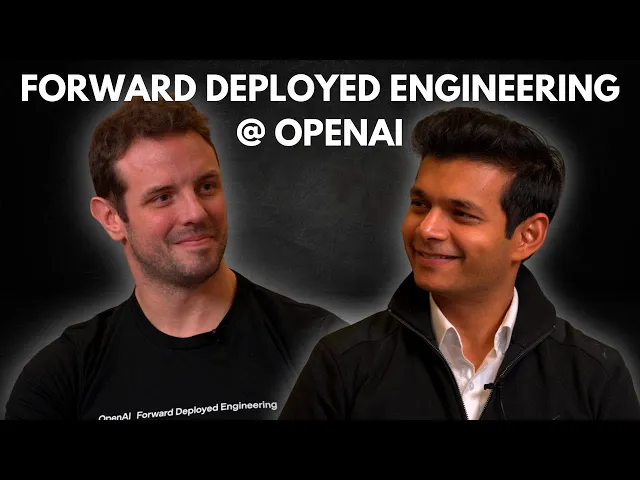
Colin Jarvis, Head of Forward Deployed Engineering at OpenAI, also cautioned against relying on single-purpose tools in isolation. Based on OpenAI’s forward-deployed work, he argued that enterprises don’t just need evaluation, or tracing, or orchestration independently. They need all of them working together, with shared context and ownership. Otherwise, the burden of integration becomes the bottleneck. 

If you want to hear this directly from OpenAI’s Head of Forward Deployed Engineering, the final section of the interview goes deeper on why fragmented tooling fails in production.

A full-stack approach turns agent engineering from a collection of experiments into an operational discipline.

A familiar pattern: from point tools to platforms

The shift toward full-stack agent engineering platforms follows a pattern engineering teams have seen before. But this shift toward platforms isn’t unique to agent engineering. Across DevOps, data, and automation, organizations consistently adopted integrated platforms once fragmentation began to slow delivery and increase operational risk.

Cloud infrastructure replaced fleets of single-purpose servers, since managing infrastructure piecemeal didn’t scale. CI/CD platforms emerged when standalone testing tools couldn’t support delivery. Data platforms consolidated ingestion and analytics after teams struggled to maintain fragmented pipelines.

In each case, we noticed that the trigger was the same: scale exposed the cost of fragmentation. Platform consolidation is increasingly driven by the operational cost of managing fragmented technology stacks, with 68% of tech leaders looking to consolidate their vendor landscape. This is especially the case as systems become more interdependent.

Moreover, agent engineering is reaching a similar inflection point. Early agent systems could be built with lightweight tooling and manual coordination. But as agents become persistent, stateful, and embedded in production workflows, teams face the same challenges that drove platform adoption in DevOps, data engineering, and MLOps.

What changes isn’t the ambition. Rather, it’s the operational burden. Without shared context across orchestration, evaluation, guardrails, observability, and deployment, we’ve seen that teams end up spending more time integrating tools instead of improving systems.

Are full-stack platforms “too heavy”? Addressing the skepticism

Feeling skeptical around full-stack platforms is reasonable.

After all, they introduce a steep learning curve and might feel unnecessary for early-stage prototypes. For small experiments or isolated use cases, point solutions are usually the fastest way to move.

The tradeoff emerges at scale, with trends pointing towards growing enterprise adoption of AI DevOps and platform-based solutions as teams seek to reduce integration overhead and standardize AI operations. The DevOps market size is expected to increase by $8.61 billion from 2025-2029.

As agent systems grow, the hidden cost shifts from tooling to integration. Teams spend increasing effort:

  • Reconciling versions

  • Aligning evaluations with deployments

  • Maintaining observability across tools

Note that full-stack doesn’t mean monolithic. Modern platforms are modular by design, letting teams adopt capabilities incrementally while maintaining continuity across the agent lifecycle. 

This is a pattern that has played out repeatedly in DevOps and MLOps, where consolidation followed periods of rapid tool proliferation. Agent engineering is now experiencing the same pressure.

Owning the agent lifecycle end-to-end

With agents becoming more embedded in real workflows, teams need to start thinking more about operating them reliably over time and not just how to build them.

In production, fragmented stacks introduce tricky problems like friction and blind spots. Evaluation helps, but without orchestration, guardrails, and observability working together, teams end up having to manage complexity manually. 

A full-stack approach changes this dynamic. By connecting the agent lifecycle end-to-end, teams gain the visibility and control to scale responsibly. 

To learn more about how Orq.ai approaches full-stack agent engineering, explore the platform or speak with our team to see how this approach works in practice.


The agent stack is breaking at the seams

Agent engineering is moving quicker than you’d expect. What started out as simple prompt orchestration has turned into a complex, multi-step system that can:

  • Call tools

  • Interact with users

  • Operate continuously in production

A lot of enterprises are trying to support these systems with various point solutions: one tool for orchestration, another for evaluation, another for observability, and yet another for deployment.

Today’s AI stacks often look like a mix of best-of-breed tools: orchestration frameworks, evaluation platforms, observability stacks, and generic deployment backends. Each tool solves a discrete problem, but stitching them together requires custom integration. It also creates blind spots in cost and operational visibility.

This disconnect leaves enterprises with various challenges at a time where reliability and control matter the most. 66% of AI teams report that they don’t have the tools needed to deliver models that meet business goals, while 71% of AI practitioners say they lack confidence in their AI solutions once deployed. Nearly one in three teams struggle to operationalize generative AI at all, despite strong model performance in isolation. 

As agent-based systems move from experimentation into core business workflows, the cost of managing disconnected systems is compounding rapidly across engineering and operation teams. Beyond cost, teams quickly accumulate technical debt when integrating these tools together. Orchestration frameworks, evaluation tools, observability layers, and model gateways often use incompatible abstractions and data models.

Leaders aren’t left with the issue of agents being able to deliver sufficient value. It’s whether their enterprise has the infrastructure to build, evaluate, deploy, and operate agents at scale. 

How agent engineering has evolved and why the old stack no longer works

Early agent systems were relatively simple.

A prompt, a model call, and maybe a model invocation or two that were stitched together in notebooks or lightweight frameworks. Point solutions made sense at that stage. Teams optimized for speed and proof-of-concept delivery.

Modern agent systems aren’t isolated experiments anymore, as they:

  • Coordinate multiple steps

  • Manage state

  • Call external services

  • Reason over documents or media

As these systems mature, they introduce requirements that the original stack was never designed to handle, like versioning across experiments, consistent evaluation, and controlled deployment. There’s a shift from raw compute expansion toward orchestration, lifecycle efficiency, and system-level coordination as AI systems mature.

The challenge isn’t just about building agents. It’s about operating them reliably at scale. That shift fundamentally changes what the underlying platform needs to provide. 

What breaks first when teams rely on fragmented stacks

Point solutions often feel productive at first, as each tool solves a clear problem. In isolation, they work well. 

However, the cracks start to appear when systems move beyond experimentation. 

The first thing to break is consistency. Prompts and agent logic evolve quickly, but evaluations and guardrails often lag behind. Teams lose clarity on which version of an agent is running. How it was tested, and what assumptions were made along the way. 

Next, ownership becomes unclear. Orchestration might live with one team, evaluations with another, and deployment with platform engineering. When something goes wrong, no single system shows how the agent behaved end-to-end. Debugging turns into coordination rather than engineering.

This fragmentation doesn’t just slow down engineering teams. It also compounds at the organizational level. While more executives are seeing AI as a growth driver, operational silos remain one of the biggest barriers to realizing value. In fact 84% of surveyed CMOs mentioned that fragmented operations are making it difficult to get the most out of their AI systems.

As agents enter production, these issues surface most clearly in observability. Teams can see failures, but commonly struggle to trace them back to specific prompts, datasets, or decisions across the agent lifecycle. 

Lastly, deployment risk increases. Without a unified view of experimentation, evaluation, and runtime behavior, even small changes feel high risk. Teams either slow delivery or ship without confidence.

Why evaluation alone isn’t enough in production

As agent systems mature, many teams invest heavily in evaluation frameworks to compare prompts, score outputs, or detect regressions. Although, it’s worth noting that evaluation on its own doesn’t solve the broader operational challenges of running agents in real business workflows.

The core limitation is context. Evaluations typically focus on model outputs in controlled settings. Static or isolated evaluations often fail to capture emergent behavior in multi-step agent systems operating in real environments. 

In production, agents operate across multiple steps and data sources. They adapt to changing inputs and trigger downstream actions. Without visibility into how evaluations connect to orchestration and guardrails, teams don’t see the full picture when it comes to system health.

Additionally, there’s a notable gap between testing and deployment. An agent may perform well in evaluation, yet behave differently once deployed. This could be because of:

  • Prompt drift

  • Tool failures

  • Data changes

  • Environmental differences

Lastly, enterprises need to consider that evaluation alone doesn’t address ownership and accountability. Knowing that an output failed is certainly useful information. But knowing why it failed, where in the lifecycle it occurred, and how to prevent it next time requires deeper integration.

At scale, evaluation can’t simply be a standalone solution. It needs to be part of a broader, end-to-end platform.

What a full-stack agent engineering platform actually means

A full-stack agent engineering platform isn’t about replacing every tool in the ecosystem. Rather, it’s about owning the agent lifecycle end-to-end.

In practice, this means providing a unified foundation across the stages that matter most. Some of which include:

  • Building and orchestration

  • Evaluations

  • Guardrails

  • Observability

  • Deployment

At enterprise scale, agent systems don’t just need orchestration and evaluation. They need governance, risk mapping, and auditable controls. Full-stack platforms make this possible by connecting policy requirements, risk taxonomy, and operational control into a single system.

The defining characteristic of a full-stack platform is continuity across the agent lifecycle. Lifecycle fragmentation increases operational risk, while integrated orchestration across development, evaluation, and deployment improves reliability.

The same agent definition flows from experimentation into evaluation, from evaluation to deployment, and deployment into monitoring. A huge benefit of this approach is that teams don’t lose context between stages, and changes can be understood across the entire lifecycle.

This matters because agent systems aren’t static. They continuously evolve, as prompts, tools, and business requirements change. Without a platform that connects these layers, teams are forced to manage complexity manually, increasing risk and slowing delivery.

Colin Jarvis, Head of Forward Deployed Engineering at OpenAI, also cautioned against relying on single-purpose tools in isolation. Based on OpenAI’s forward-deployed work, he argued that enterprises don’t just need evaluation, or tracing, or orchestration independently. They need all of them working together, with shared context and ownership. Otherwise, the burden of integration becomes the bottleneck. 

If you want to hear this directly from OpenAI’s Head of Forward Deployed Engineering, the final section of the interview goes deeper on why fragmented tooling fails in production.

A full-stack approach turns agent engineering from a collection of experiments into an operational discipline.

A familiar pattern: from point tools to platforms

The shift toward full-stack agent engineering platforms follows a pattern engineering teams have seen before. But this shift toward platforms isn’t unique to agent engineering. Across DevOps, data, and automation, organizations consistently adopted integrated platforms once fragmentation began to slow delivery and increase operational risk.

Cloud infrastructure replaced fleets of single-purpose servers, since managing infrastructure piecemeal didn’t scale. CI/CD platforms emerged when standalone testing tools couldn’t support delivery. Data platforms consolidated ingestion and analytics after teams struggled to maintain fragmented pipelines.

In each case, we noticed that the trigger was the same: scale exposed the cost of fragmentation. Platform consolidation is increasingly driven by the operational cost of managing fragmented technology stacks, with 68% of tech leaders looking to consolidate their vendor landscape. This is especially the case as systems become more interdependent.

Moreover, agent engineering is reaching a similar inflection point. Early agent systems could be built with lightweight tooling and manual coordination. But as agents become persistent, stateful, and embedded in production workflows, teams face the same challenges that drove platform adoption in DevOps, data engineering, and MLOps.

What changes isn’t the ambition. Rather, it’s the operational burden. Without shared context across orchestration, evaluation, guardrails, observability, and deployment, we’ve seen that teams end up spending more time integrating tools instead of improving systems.

Are full-stack platforms “too heavy”? Addressing the skepticism

Feeling skeptical around full-stack platforms is reasonable.

After all, they introduce a steep learning curve and might feel unnecessary for early-stage prototypes. For small experiments or isolated use cases, point solutions are usually the fastest way to move.

The tradeoff emerges at scale, with trends pointing towards growing enterprise adoption of AI DevOps and platform-based solutions as teams seek to reduce integration overhead and standardize AI operations. The DevOps market size is expected to increase by $8.61 billion from 2025-2029.

As agent systems grow, the hidden cost shifts from tooling to integration. Teams spend increasing effort:

  • Reconciling versions

  • Aligning evaluations with deployments

  • Maintaining observability across tools

Note that full-stack doesn’t mean monolithic. Modern platforms are modular by design, letting teams adopt capabilities incrementally while maintaining continuity across the agent lifecycle. 

This is a pattern that has played out repeatedly in DevOps and MLOps, where consolidation followed periods of rapid tool proliferation. Agent engineering is now experiencing the same pressure.

Owning the agent lifecycle end-to-end

With agents becoming more embedded in real workflows, teams need to start thinking more about operating them reliably over time and not just how to build them.

In production, fragmented stacks introduce tricky problems like friction and blind spots. Evaluation helps, but without orchestration, guardrails, and observability working together, teams end up having to manage complexity manually. 

A full-stack approach changes this dynamic. By connecting the agent lifecycle end-to-end, teams gain the visibility and control to scale responsibly. 

To learn more about how Orq.ai approaches full-stack agent engineering, explore the platform or speak with our team to see how this approach works in practice.

The agent stack is breaking at the seams

Agent engineering is moving quicker than you’d expect. What started out as simple prompt orchestration has turned into a complex, multi-step system that can:

  • Call tools

  • Interact with users

  • Operate continuously in production

A lot of enterprises are trying to support these systems with various point solutions: one tool for orchestration, another for evaluation, another for observability, and yet another for deployment.

Today’s AI stacks often look like a mix of best-of-breed tools: orchestration frameworks, evaluation platforms, observability stacks, and generic deployment backends. Each tool solves a discrete problem, but stitching them together requires custom integration. It also creates blind spots in cost and operational visibility.

This disconnect leaves enterprises with various challenges at a time where reliability and control matter the most. 66% of AI teams report that they don’t have the tools needed to deliver models that meet business goals, while 71% of AI practitioners say they lack confidence in their AI solutions once deployed. Nearly one in three teams struggle to operationalize generative AI at all, despite strong model performance in isolation. 

As agent-based systems move from experimentation into core business workflows, the cost of managing disconnected systems is compounding rapidly across engineering and operation teams. Beyond cost, teams quickly accumulate technical debt when integrating these tools together. Orchestration frameworks, evaluation tools, observability layers, and model gateways often use incompatible abstractions and data models.

Leaders aren’t left with the issue of agents being able to deliver sufficient value. It’s whether their enterprise has the infrastructure to build, evaluate, deploy, and operate agents at scale. 

How agent engineering has evolved and why the old stack no longer works

Early agent systems were relatively simple.

A prompt, a model call, and maybe a model invocation or two that were stitched together in notebooks or lightweight frameworks. Point solutions made sense at that stage. Teams optimized for speed and proof-of-concept delivery.

Modern agent systems aren’t isolated experiments anymore, as they:

  • Coordinate multiple steps

  • Manage state

  • Call external services

  • Reason over documents or media

As these systems mature, they introduce requirements that the original stack was never designed to handle, like versioning across experiments, consistent evaluation, and controlled deployment. There’s a shift from raw compute expansion toward orchestration, lifecycle efficiency, and system-level coordination as AI systems mature.

The challenge isn’t just about building agents. It’s about operating them reliably at scale. That shift fundamentally changes what the underlying platform needs to provide. 

What breaks first when teams rely on fragmented stacks

Point solutions often feel productive at first, as each tool solves a clear problem. In isolation, they work well. 

However, the cracks start to appear when systems move beyond experimentation. 

The first thing to break is consistency. Prompts and agent logic evolve quickly, but evaluations and guardrails often lag behind. Teams lose clarity on which version of an agent is running. How it was tested, and what assumptions were made along the way. 

Next, ownership becomes unclear. Orchestration might live with one team, evaluations with another, and deployment with platform engineering. When something goes wrong, no single system shows how the agent behaved end-to-end. Debugging turns into coordination rather than engineering.

This fragmentation doesn’t just slow down engineering teams. It also compounds at the organizational level. While more executives are seeing AI as a growth driver, operational silos remain one of the biggest barriers to realizing value. In fact 84% of surveyed CMOs mentioned that fragmented operations are making it difficult to get the most out of their AI systems.

As agents enter production, these issues surface most clearly in observability. Teams can see failures, but commonly struggle to trace them back to specific prompts, datasets, or decisions across the agent lifecycle. 

Lastly, deployment risk increases. Without a unified view of experimentation, evaluation, and runtime behavior, even small changes feel high risk. Teams either slow delivery or ship without confidence.

Why evaluation alone isn’t enough in production

As agent systems mature, many teams invest heavily in evaluation frameworks to compare prompts, score outputs, or detect regressions. Although, it’s worth noting that evaluation on its own doesn’t solve the broader operational challenges of running agents in real business workflows.

The core limitation is context. Evaluations typically focus on model outputs in controlled settings. Static or isolated evaluations often fail to capture emergent behavior in multi-step agent systems operating in real environments. 

In production, agents operate across multiple steps and data sources. They adapt to changing inputs and trigger downstream actions. Without visibility into how evaluations connect to orchestration and guardrails, teams don’t see the full picture when it comes to system health.

Additionally, there’s a notable gap between testing and deployment. An agent may perform well in evaluation, yet behave differently once deployed. This could be because of:

  • Prompt drift

  • Tool failures

  • Data changes

  • Environmental differences

Lastly, enterprises need to consider that evaluation alone doesn’t address ownership and accountability. Knowing that an output failed is certainly useful information. But knowing why it failed, where in the lifecycle it occurred, and how to prevent it next time requires deeper integration.

At scale, evaluation can’t simply be a standalone solution. It needs to be part of a broader, end-to-end platform.

What a full-stack agent engineering platform actually means

A full-stack agent engineering platform isn’t about replacing every tool in the ecosystem. Rather, it’s about owning the agent lifecycle end-to-end.

In practice, this means providing a unified foundation across the stages that matter most. Some of which include:

  • Building and orchestration

  • Evaluations

  • Guardrails

  • Observability

  • Deployment

At enterprise scale, agent systems don’t just need orchestration and evaluation. They need governance, risk mapping, and auditable controls. Full-stack platforms make this possible by connecting policy requirements, risk taxonomy, and operational control into a single system.

The defining characteristic of a full-stack platform is continuity across the agent lifecycle. Lifecycle fragmentation increases operational risk, while integrated orchestration across development, evaluation, and deployment improves reliability.

The same agent definition flows from experimentation into evaluation, from evaluation to deployment, and deployment into monitoring. A huge benefit of this approach is that teams don’t lose context between stages, and changes can be understood across the entire lifecycle.

This matters because agent systems aren’t static. They continuously evolve, as prompts, tools, and business requirements change. Without a platform that connects these layers, teams are forced to manage complexity manually, increasing risk and slowing delivery.

Colin Jarvis, Head of Forward Deployed Engineering at OpenAI, also cautioned against relying on single-purpose tools in isolation. Based on OpenAI’s forward-deployed work, he argued that enterprises don’t just need evaluation, or tracing, or orchestration independently. They need all of them working together, with shared context and ownership. Otherwise, the burden of integration becomes the bottleneck. 

If you want to hear this directly from OpenAI’s Head of Forward Deployed Engineering, the final section of the interview goes deeper on why fragmented tooling fails in production.

A full-stack approach turns agent engineering from a collection of experiments into an operational discipline.

A familiar pattern: from point tools to platforms

The shift toward full-stack agent engineering platforms follows a pattern engineering teams have seen before. But this shift toward platforms isn’t unique to agent engineering. Across DevOps, data, and automation, organizations consistently adopted integrated platforms once fragmentation began to slow delivery and increase operational risk.

Cloud infrastructure replaced fleets of single-purpose servers, since managing infrastructure piecemeal didn’t scale. CI/CD platforms emerged when standalone testing tools couldn’t support delivery. Data platforms consolidated ingestion and analytics after teams struggled to maintain fragmented pipelines.

In each case, we noticed that the trigger was the same: scale exposed the cost of fragmentation. Platform consolidation is increasingly driven by the operational cost of managing fragmented technology stacks, with 68% of tech leaders looking to consolidate their vendor landscape. This is especially the case as systems become more interdependent.

Moreover, agent engineering is reaching a similar inflection point. Early agent systems could be built with lightweight tooling and manual coordination. But as agents become persistent, stateful, and embedded in production workflows, teams face the same challenges that drove platform adoption in DevOps, data engineering, and MLOps.

What changes isn’t the ambition. Rather, it’s the operational burden. Without shared context across orchestration, evaluation, guardrails, observability, and deployment, we’ve seen that teams end up spending more time integrating tools instead of improving systems.

Are full-stack platforms “too heavy”? Addressing the skepticism

Feeling skeptical around full-stack platforms is reasonable.

After all, they introduce a steep learning curve and might feel unnecessary for early-stage prototypes. For small experiments or isolated use cases, point solutions are usually the fastest way to move.

The tradeoff emerges at scale, with trends pointing towards growing enterprise adoption of AI DevOps and platform-based solutions as teams seek to reduce integration overhead and standardize AI operations. The DevOps market size is expected to increase by $8.61 billion from 2025-2029.

As agent systems grow, the hidden cost shifts from tooling to integration. Teams spend increasing effort:

  • Reconciling versions

  • Aligning evaluations with deployments

  • Maintaining observability across tools

Note that full-stack doesn’t mean monolithic. Modern platforms are modular by design, letting teams adopt capabilities incrementally while maintaining continuity across the agent lifecycle. 

This is a pattern that has played out repeatedly in DevOps and MLOps, where consolidation followed periods of rapid tool proliferation. Agent engineering is now experiencing the same pressure.

Owning the agent lifecycle end-to-end

With agents becoming more embedded in real workflows, teams need to start thinking more about operating them reliably over time and not just how to build them.

In production, fragmented stacks introduce tricky problems like friction and blind spots. Evaluation helps, but without orchestration, guardrails, and observability working together, teams end up having to manage complexity manually. 

A full-stack approach changes this dynamic. By connecting the agent lifecycle end-to-end, teams gain the visibility and control to scale responsibly. 

To learn more about how Orq.ai approaches full-stack agent engineering, explore the platform or speak with our team to see how this approach works in practice.

The agent stack is breaking at the seams

Agent engineering is moving quicker than you’d expect. What started out as simple prompt orchestration has turned into a complex, multi-step system that can:

  • Call tools

  • Interact with users

  • Operate continuously in production

A lot of enterprises are trying to support these systems with various point solutions: one tool for orchestration, another for evaluation, another for observability, and yet another for deployment.

Today’s AI stacks often look like a mix of best-of-breed tools: orchestration frameworks, evaluation platforms, observability stacks, and generic deployment backends. Each tool solves a discrete problem, but stitching them together requires custom integration. It also creates blind spots in cost and operational visibility.

This disconnect leaves enterprises with various challenges at a time where reliability and control matter the most. 66% of AI teams report that they don’t have the tools needed to deliver models that meet business goals, while 71% of AI practitioners say they lack confidence in their AI solutions once deployed. Nearly one in three teams struggle to operationalize generative AI at all, despite strong model performance in isolation. 

As agent-based systems move from experimentation into core business workflows, the cost of managing disconnected systems is compounding rapidly across engineering and operation teams. Beyond cost, teams quickly accumulate technical debt when integrating these tools together. Orchestration frameworks, evaluation tools, observability layers, and model gateways often use incompatible abstractions and data models.

Leaders aren’t left with the issue of agents being able to deliver sufficient value. It’s whether their enterprise has the infrastructure to build, evaluate, deploy, and operate agents at scale. 

How agent engineering has evolved and why the old stack no longer works

Early agent systems were relatively simple.

A prompt, a model call, and maybe a model invocation or two that were stitched together in notebooks or lightweight frameworks. Point solutions made sense at that stage. Teams optimized for speed and proof-of-concept delivery.

Modern agent systems aren’t isolated experiments anymore, as they:

  • Coordinate multiple steps

  • Manage state

  • Call external services

  • Reason over documents or media

As these systems mature, they introduce requirements that the original stack was never designed to handle, like versioning across experiments, consistent evaluation, and controlled deployment. There’s a shift from raw compute expansion toward orchestration, lifecycle efficiency, and system-level coordination as AI systems mature.

The challenge isn’t just about building agents. It’s about operating them reliably at scale. That shift fundamentally changes what the underlying platform needs to provide. 

What breaks first when teams rely on fragmented stacks

Point solutions often feel productive at first, as each tool solves a clear problem. In isolation, they work well. 

However, the cracks start to appear when systems move beyond experimentation. 

The first thing to break is consistency. Prompts and agent logic evolve quickly, but evaluations and guardrails often lag behind. Teams lose clarity on which version of an agent is running. How it was tested, and what assumptions were made along the way. 

Next, ownership becomes unclear. Orchestration might live with one team, evaluations with another, and deployment with platform engineering. When something goes wrong, no single system shows how the agent behaved end-to-end. Debugging turns into coordination rather than engineering.

This fragmentation doesn’t just slow down engineering teams. It also compounds at the organizational level. While more executives are seeing AI as a growth driver, operational silos remain one of the biggest barriers to realizing value. In fact 84% of surveyed CMOs mentioned that fragmented operations are making it difficult to get the most out of their AI systems.

As agents enter production, these issues surface most clearly in observability. Teams can see failures, but commonly struggle to trace them back to specific prompts, datasets, or decisions across the agent lifecycle. 

Lastly, deployment risk increases. Without a unified view of experimentation, evaluation, and runtime behavior, even small changes feel high risk. Teams either slow delivery or ship without confidence.

Why evaluation alone isn’t enough in production

As agent systems mature, many teams invest heavily in evaluation frameworks to compare prompts, score outputs, or detect regressions. Although, it’s worth noting that evaluation on its own doesn’t solve the broader operational challenges of running agents in real business workflows.

The core limitation is context. Evaluations typically focus on model outputs in controlled settings. Static or isolated evaluations often fail to capture emergent behavior in multi-step agent systems operating in real environments. 

In production, agents operate across multiple steps and data sources. They adapt to changing inputs and trigger downstream actions. Without visibility into how evaluations connect to orchestration and guardrails, teams don’t see the full picture when it comes to system health.

Additionally, there’s a notable gap between testing and deployment. An agent may perform well in evaluation, yet behave differently once deployed. This could be because of:

  • Prompt drift

  • Tool failures

  • Data changes

  • Environmental differences

Lastly, enterprises need to consider that evaluation alone doesn’t address ownership and accountability. Knowing that an output failed is certainly useful information. But knowing why it failed, where in the lifecycle it occurred, and how to prevent it next time requires deeper integration.

At scale, evaluation can’t simply be a standalone solution. It needs to be part of a broader, end-to-end platform.

What a full-stack agent engineering platform actually means

A full-stack agent engineering platform isn’t about replacing every tool in the ecosystem. Rather, it’s about owning the agent lifecycle end-to-end.

In practice, this means providing a unified foundation across the stages that matter most. Some of which include:

  • Building and orchestration

  • Evaluations

  • Guardrails

  • Observability

  • Deployment

At enterprise scale, agent systems don’t just need orchestration and evaluation. They need governance, risk mapping, and auditable controls. Full-stack platforms make this possible by connecting policy requirements, risk taxonomy, and operational control into a single system.

The defining characteristic of a full-stack platform is continuity across the agent lifecycle. Lifecycle fragmentation increases operational risk, while integrated orchestration across development, evaluation, and deployment improves reliability.

The same agent definition flows from experimentation into evaluation, from evaluation to deployment, and deployment into monitoring. A huge benefit of this approach is that teams don’t lose context between stages, and changes can be understood across the entire lifecycle.

This matters because agent systems aren’t static. They continuously evolve, as prompts, tools, and business requirements change. Without a platform that connects these layers, teams are forced to manage complexity manually, increasing risk and slowing delivery.

Colin Jarvis, Head of Forward Deployed Engineering at OpenAI, also cautioned against relying on single-purpose tools in isolation. Based on OpenAI’s forward-deployed work, he argued that enterprises don’t just need evaluation, or tracing, or orchestration independently. They need all of them working together, with shared context and ownership. Otherwise, the burden of integration becomes the bottleneck. 

If you want to hear this directly from OpenAI’s Head of Forward Deployed Engineering, the final section of the interview goes deeper on why fragmented tooling fails in production.

A full-stack approach turns agent engineering from a collection of experiments into an operational discipline.

A familiar pattern: from point tools to platforms

The shift toward full-stack agent engineering platforms follows a pattern engineering teams have seen before. But this shift toward platforms isn’t unique to agent engineering. Across DevOps, data, and automation, organizations consistently adopted integrated platforms once fragmentation began to slow delivery and increase operational risk.

Cloud infrastructure replaced fleets of single-purpose servers, since managing infrastructure piecemeal didn’t scale. CI/CD platforms emerged when standalone testing tools couldn’t support delivery. Data platforms consolidated ingestion and analytics after teams struggled to maintain fragmented pipelines.

In each case, we noticed that the trigger was the same: scale exposed the cost of fragmentation. Platform consolidation is increasingly driven by the operational cost of managing fragmented technology stacks, with 68% of tech leaders looking to consolidate their vendor landscape. This is especially the case as systems become more interdependent.

Moreover, agent engineering is reaching a similar inflection point. Early agent systems could be built with lightweight tooling and manual coordination. But as agents become persistent, stateful, and embedded in production workflows, teams face the same challenges that drove platform adoption in DevOps, data engineering, and MLOps.

What changes isn’t the ambition. Rather, it’s the operational burden. Without shared context across orchestration, evaluation, guardrails, observability, and deployment, we’ve seen that teams end up spending more time integrating tools instead of improving systems.

Are full-stack platforms “too heavy”? Addressing the skepticism

Feeling skeptical around full-stack platforms is reasonable.

After all, they introduce a steep learning curve and might feel unnecessary for early-stage prototypes. For small experiments or isolated use cases, point solutions are usually the fastest way to move.

The tradeoff emerges at scale, with trends pointing towards growing enterprise adoption of AI DevOps and platform-based solutions as teams seek to reduce integration overhead and standardize AI operations. The DevOps market size is expected to increase by $8.61 billion from 2025-2029.

As agent systems grow, the hidden cost shifts from tooling to integration. Teams spend increasing effort:

  • Reconciling versions

  • Aligning evaluations with deployments

  • Maintaining observability across tools

Note that full-stack doesn’t mean monolithic. Modern platforms are modular by design, letting teams adopt capabilities incrementally while maintaining continuity across the agent lifecycle. 

This is a pattern that has played out repeatedly in DevOps and MLOps, where consolidation followed periods of rapid tool proliferation. Agent engineering is now experiencing the same pressure.

Owning the agent lifecycle end-to-end

With agents becoming more embedded in real workflows, teams need to start thinking more about operating them reliably over time and not just how to build them.

In production, fragmented stacks introduce tricky problems like friction and blind spots. Evaluation helps, but without orchestration, guardrails, and observability working together, teams end up having to manage complexity manually. 

A full-stack approach changes this dynamic. By connecting the agent lifecycle end-to-end, teams gain the visibility and control to scale responsibly. 

To learn more about how Orq.ai approaches full-stack agent engineering, explore the platform or speak with our team to see how this approach works in practice.

Image of Reginald Martyr

Sohrab Hosseini

Co-founder (Orq.ai)

About

Sohrab is one of the two co-founders at Orq.ai. Before founding Orq.ai, Sohrab led and grew different SaaS companies as COO/CTO and as a McKinsey associate.

Image of Reginald Martyr

Sohrab Hosseini

Co-founder (Orq.ai)

About

Sohrab is one of the two co-founders at Orq.ai. Before founding Orq.ai, Sohrab led and grew different SaaS companies as COO/CTO and as a McKinsey associate.

Image of Reginald Martyr

Sohrab Hosseini

Co-founder (Orq.ai)

About

Sohrab is one of the two co-founders at Orq.ai. Before founding Orq.ai, Sohrab led and grew different SaaS companies as COO/CTO and as a McKinsey associate.

Image of Reginald Martyr

Sohrab Hosseini

Co-founder (Orq.ai)

About

Sohrab is one of the two co-founders at Orq.ai. Before founding Orq.ai, Sohrab led and grew different SaaS companies as COO/CTO and as a McKinsey associate.

Create an account and start building today.

Create an account and start building today.

Create an account and start building today.

Create an account and start building today.